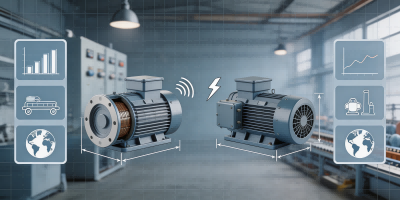
IEC vs NEMA Motor Standards is an important consideration when selecting industrial electric motors for international projects. Different regions follow different motor standards that affect dimensions, performance, efficiency requirements and installation compatibility.
IEC and NEMA are the two most widely recognized motor standards worldwide. Understanding the differences helps engineers, distributors and purchasing teams select the correct motor solution for their applications.
When sourcing industrial motors, choosing between IEC and NEMA designs depends on project location, equipment requirements and local electrical standards.
What Are IEC and NEMA Motor Standards?
Motor standards define the technical requirements used to design, manufacture and test electric motors.
These standards help ensure consistency in:
- Motor dimensions
- Mounting configurations
- Performance characteristics
- Efficiency levels
- Testing requirements
- Safety requirements
The two major international motor standard systems are IEC and NEMA.
IEC Motor Standards Explained
IEC motor standards are developed by the International Electrotechnical Commission and are widely used in Europe, Asia, Africa and many other global markets.
IEC standards provide internationally recognized specifications for electric motor design and performance.
Common IEC motor specifications include:
- IEC frame sizes
- IEC efficiency classes
- Standard mounting dimensions
- Electrical performance requirements
- Testing procedures
Many global industrial motor manufacturers produce IEC motors because they are suitable for international projects.
NEMA Motor Standards Explained
NEMA motor standards are developed by the National Electrical Manufacturers Association and are primarily used in North America.
NEMA standards define motor performance, dimensions and operating characteristics for industrial applications.
Important NEMA motor specifications include:
- NEMA frame sizes
- Motor performance requirements
- Starting characteristics
- Efficiency standards
- Temperature rise limits
NEMA motors are commonly selected for industrial projects in the United States, Canada and regions following North American standards.
IEC Motors vs NEMA Motors Comparison
| Category | IEC Motors | NEMA Motors |
|---|---|---|
| Standard Organization | International Electrotechnical Commission | National Electrical Manufacturers Association |
| Main Markets | Europe, Asia and global markets | North America |
| Frame System | IEC frame sizes | NEMA frame sizes |
| Dimensions | Metric based design | Imperial based design |
| Applications | Global industrial projects | North American industrial projects |
Motor Dimensions and Frame Sizes
One of the major differences between IEC and NEMA motors is the frame size system.
IEC motors generally use metric dimensions, while NEMA motors use inch-based dimensions.
This difference affects:
- Motor mounting dimensions
- Shaft height
- Base dimensions
- Replacement compatibility
Before replacing an existing motor, engineers should confirm that the new motor matches the required standard and installation dimensions.
Efficiency Standards Comparison
Both IEC and NEMA standards include efficiency requirements for industrial motors.
IEC motors commonly use efficiency classes such as:
- IE1 Standard Efficiency
- IE2 High Efficiency
- IE3 Premium Efficiency
- IE4 Super Premium Efficiency
Learn more about IE3 and IE4 high efficiency motors.
NEMA motors use efficiency classifications such as Premium Efficiency defined by NEMA requirements.
Voltage and Frequency Differences
Electrical supply requirements are another important factor when comparing IEC and NEMA motors.
IEC motors are commonly designed for international voltage systems, while NEMA motors are frequently designed for North American electrical systems.
Engineers should confirm:
- Voltage rating
- Frequency
- Phase system
- Connection method
Correct electrical matching ensures reliable motor operation.
Performance and Testing Requirements
IEC and NEMA standards both define requirements for motor performance testing.
Testing may include:
- Efficiency measurement
- Temperature rise testing
- Load testing
- Insulation testing
- Mechanical inspection
Professional manufacturers follow these standards to ensure consistent motor quality.
Global Applications of IEC Motors
IEC motors are widely used in international industrial applications including:
- Manufacturing plants
- Water treatment facilities
- Mining operations
- Oil and gas projects
- Industrial processing systems
Many international customers choose IEC motors because of their global compatibility.
Global Applications of NEMA Motors
NEMA motors are commonly used in:
- United States industrial facilities
- Canadian manufacturing plants
- North American machinery systems
- Projects requiring NEMA specifications
How to Choose Between IEC and NEMA Motors
Selecting between IEC and NEMA motors depends on several project requirements.
Project Location
The country and regional standards often determine whether IEC or NEMA motors are preferred.
Equipment Requirements
Existing equipment dimensions, mounting systems and replacement requirements must be considered.
Electrical Specifications
Voltage, frequency and power supply conditions should match the selected motor design.
Application Environment
Industrial conditions such as dust, moisture and hazardous areas affect motor selection.
For demanding environments, specialized solutions such as explosion proof motors may be required.
IEC Motors for International Projects
For global industrial projects, IEC motors are often selected because of their worldwide acceptance and standardized dimensions.
They are commonly supplied for manufacturing, infrastructure and industrial equipment applications.
NEMA Motors for North American Applications
NEMA motors remain the preferred choice for many North American projects because they match local equipment designs and electrical standards.
Choosing the Right Industrial Motor Supplier
A reliable motor supplier should understand both IEC and NEMA standards and help customers select suitable motors for their projects.
Ozan Motor supplies industrial electric motors for global customers, including IEC motors and NEMA-compatible motor solutions.
We provide motors from leading brands including ABB motors, WEG motors and Siemens motors.
Our team supports customers with motor selection based on technical specifications, application requirements and international standards.
Frequently Asked Questions
What is the difference between IEC and NEMA motor standards?
IEC standards are mainly used internationally, while NEMA standards are primarily used in North America. They differ in dimensions, specifications and testing requirements.
Are IEC motors and NEMA motors interchangeable?
Not always. Frame sizes, mounting dimensions and electrical specifications may differ between IEC and NEMA motors.
Which motor standard is used in Europe?
IEC motor standards are widely used throughout Europe and many international markets.
Which motor standard is used in the United States?
NEMA motor standards are commonly used in the United States and Canada.
How do I select the correct motor standard?
Selection depends on project location, equipment requirements, electrical specifications and customer standards.