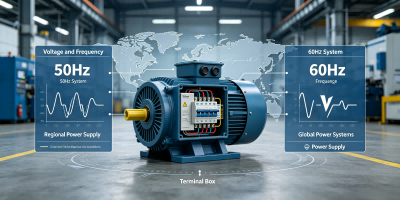
Electric Motor Voltage and Frequency are two critical factors that determine whether an industrial motor can operate correctly in a specific electrical system.
When selecting motors for international applications, engineers and purchasing teams must consider supply voltage, frequency, motor design and operating requirements.
The most common industrial power frequencies worldwide are 50Hz and 60Hz. Understanding the difference between 50Hz and 60Hz motors helps customers choose the right motor for their applications.
Ozan Motor supplies industrial electric motors suitable for different voltage and frequency requirements for global markets.
What Is Electric Motor Voltage?
Electric motor voltage refers to the electrical potential supplied to the motor terminals during operation.
The motor voltage must match the available power supply to ensure proper performance and reliable operation.
Common industrial motor voltages include:
- 230V
- 400V
- 415V
- 460V
- 690V
- Medium and high voltage levels
Understanding Motor Frequency
Motor frequency refers to the frequency of the alternating current (AC) power supply, measured in Hertz (Hz).
The two most common industrial frequencies are:
- 50Hz
- 60Hz
Frequency affects motor operating characteristics, including rotational speed and performance.
Why Voltage and Frequency Matter in Motor Selection
Selecting the correct voltage and frequency is essential because motors are designed for specific electrical conditions.
Incorrect voltage or frequency matching may affect:
- Motor performance
- Operating speed
- Torque capability
- Energy consumption
- Equipment reliability
For international projects, voltage and frequency compatibility should always be confirmed before motor selection.
Common Industrial Motor Voltages
Industrial motor voltage requirements vary depending on application size, country standards and equipment design.
Low Voltage Motors
Low voltage motors are commonly used in industrial facilities for pumps, fans, compressors and general machinery.
Typical voltage ranges include:
- 230V
- 400V
- 415V
- 460V
- 690V
Learn more about low voltage motors.
High Voltage Motors
High voltage motors are used for large industrial equipment requiring higher power output.
Typical applications include:
- Mining equipment
- Large compressors
- Power generation systems
- Heavy industrial machinery
Learn more about high voltage motors.
What Is a 50Hz Motor?
A 50Hz motor is designed to operate with an electrical supply frequency of 50 Hertz.
50Hz power systems are widely used in many regions including Europe, Asia, Africa and parts of South America.
Common 50Hz industrial motor applications include:
- Pumps
- Fans
- Compressors
- Industrial production equipment
What Is a 60Hz Motor?
A 60Hz motor is designed for electrical systems operating at 60 Hertz.
60Hz power systems are commonly used in North America and some other regions.
60Hz motors are widely used in:
- Industrial facilities
- Commercial equipment
- Manufacturing systems
50Hz vs 60Hz Motor Comparison
| Item | 50Hz Motor | 60Hz Motor |
|---|---|---|
| Power Frequency | 50 Hertz | 60 Hertz |
| Common Regions | Europe, Asia, Africa | North America and some regions |
| Motor Speed | Generally lower | Generally higher |
| Applications | Industrial equipment worldwide | Industrial equipment in 60Hz markets |
How Frequency Affects Motor Operation
The frequency of the electrical supply affects the operating characteristics of AC motors.
When frequency changes, motor speed characteristics also change.
For this reason, motors designed for 50Hz and 60Hz operation should be selected according to the actual power supply.
Learn more about electric motor speed.
Can a 50Hz Motor Run on 60Hz Power?
A 50Hz motor may operate on a 60Hz supply if the motor design, voltage and application conditions allow it.
However, engineers should check:
- Voltage compatibility
- Motor speed requirements
- Torque requirements
- Equipment limitations
Can a 60Hz Motor Run on 50Hz Power?
A 60Hz motor operating on 50Hz power may experience different operating characteristics.
Before using a motor on a different frequency system, the complete application requirements should be evaluated.
Voltage and Frequency Selection Factors
When selecting an industrial motor, consider:
- Available electrical supply
- Country power standards
- Motor voltage rating
- Frequency requirements
- Application load
- Operating environment
Three Phase Motor Voltage Requirements
Three phase motors are widely used in industrial applications because they provide efficient and reliable operation.
The correct voltage and frequency combination is essential for achieving expected motor performance.
Learn more about three phase motors.
Voltage and Frequency Standards Around the World
Industrial motor requirements vary between countries and regions.
Examples include:
- 400V / 50Hz systems
- 415V / 50Hz systems
- 460V / 60Hz systems
- 690V / 50Hz or 60Hz systems
Global motor suppliers must provide motors suitable for different electrical standards.
Motor Selection for International Applications
For international projects, motor selection requires careful consideration of electrical specifications and application requirements.
Important factors include:
- Voltage
- Frequency
- Power rating
- Speed
- Torque
- Efficiency requirements
Choosing a Reliable Industrial Motor Supplier
A professional motor supplier should understand different regional electrical standards and provide suitable motor solutions.
Ozan Motor supplies industrial electric motors for global applications, including three phase motors, low voltage motors, high voltage motors and customized motor solutions.
Our team helps customers select motors based on voltage, frequency, power and application requirements.
Frequently Asked Questions
What is electric motor frequency?
Electric motor frequency refers to the AC power supply frequency measured in Hertz, commonly 50Hz or 60Hz.
What is the difference between 50Hz and 60Hz motors?
The main difference is the electrical supply frequency, which affects motor operating characteristics.
Can a 50Hz motor run on 60Hz?
A 50Hz motor may operate on 60Hz if voltage and application requirements are suitable.
Why is motor voltage important?
Correct motor voltage matching ensures reliable operation and proper performance.
How do I select the correct motor voltage and frequency?
Selection should consider the available power supply, application requirements and motor specifications.