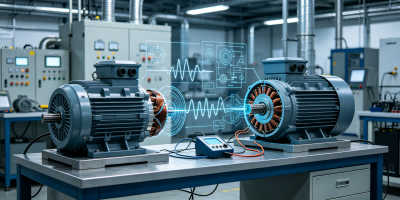
AC motor vs DC motor comparison is important for engineers, manufacturers and industrial buyers who need to select the right electric motor for their equipment and applications.
Both AC motors and DC motors are widely used in industrial systems, but they have significant differences in design, control methods, efficiency, maintenance requirements and operating performance.
What Is an AC Motor?
An AC motor is an electric motor powered by alternating current. It converts electrical energy into mechanical energy through electromagnetic induction.
AC motors are the most commonly used industrial motors because of their simple structure, high reliability and low maintenance requirements.
What Is a DC Motor?
A DC motor is powered by direct current and uses magnetic fields to generate mechanical rotation.
DC motors are known for excellent speed control and high starting torque, making them suitable for applications requiring precise control.
AC Motor vs DC Motor: Main Differences
| Feature | AC Motor | DC Motor |
|---|---|---|
| Power Supply | Alternating Current | Direct Current |
| Maintenance | Low maintenance | Higher maintenance |
| Speed Control | Requires variable frequency drive | Easy speed adjustment |
| Efficiency | High efficiency | High efficiency in controlled applications |
| Industrial Usage | Very common | Specialized applications |
AC Motor Advantages
AC motors are widely preferred in industrial applications because they provide reliable operation and excellent performance.
- Simple and durable design
- Low maintenance requirements
- Suitable for continuous operation
- Wide power range availability
- Lower operating cost
Common AC Motor Applications
AC motors are commonly used in:
- Industrial pumps
- Fans and ventilation systems
- Compressors
- Conveyor systems
- Manufacturing equipment
Related products:
DC Motor Advantages
DC motors provide excellent speed control and high starting torque, which makes them suitable for specific industrial applications.
- Excellent speed regulation
- High starting torque
- Fast response control
- Suitable for variable speed applications
Common DC Motor Applications
DC motors are often used in:
- Electric vehicles
- Battery powered equipment
- Precision machinery
- Special industrial systems
Which Motor Is Better: AC Motor or DC Motor?
There is no universal answer because the best choice depends on the application requirements.
AC motors are usually the preferred solution for general industrial equipment because of their reliability, efficiency and low maintenance.
DC motors are better suited for applications requiring precise speed control and high starting torque.
AC Motor vs DC Motor: Selection Factors
Before choosing between AC and DC motors, consider:
- Required speed control
- Starting torque requirements
- Operating environment
- Maintenance expectations
- Energy efficiency requirements
AC Motors from Global Industrial Brands
Ozan Motor supplies industrial AC motors from internationally recognized manufacturers including:
Frequently Asked Questions About AC and DC Motors
Which is better AC motor or DC motor?
AC motors are usually better for general industrial applications, while DC motors are preferred when precise speed control is required.
Why are AC motors commonly used in industry?
AC motors are popular because they are reliable, efficient, affordable and require less maintenance.
Are DC motors still used in industry?
Yes. DC motors remain useful for applications requiring high torque and accurate speed control.
Conclusion
Understanding AC motor vs DC motor differences helps industrial buyers select the correct motor solution.
For most industrial equipment, AC motors provide a reliable and cost-effective choice, while DC motors remain valuable for specialized applications requiring advanced control.
Contact Ozan Motor
Need help selecting the right industrial motor? Contact Ozan Motor for professional motor sourcing and technical support.