
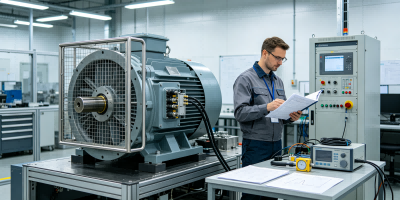
Electric motor IP rating is an important factor when selecting industrial motors for different working environments. The IP protection class determines how well a motor enclosure protects internal components from dust, water and external conditions.
Choosing the correct IP rating helps improve motor reliability, extend service life and ensure safe operation in industrial applications.
What Is an Electric Motor IP Rating?
An electric motor IP rating, also known as an Ingress Protection rating, defines the level of protection provided by the motor enclosure against solid particles and liquids.
The IP code is usually written as two numbers:
- The first number indicates protection against solid objects such as dust.
- The second number indicates protection against water.
For industrial motors, common protection levels include IP55, IP65 and IP66.
Why Motor IP Rating Is Important for Industrial Applications
Industrial motors often operate in challenging environments including factories, outdoor facilities, mining sites and chemical plants.
The correct motor protection class helps prevent:
- Dust entering the motor enclosure
- Water damage
- Electrical failures
- Reduced motor lifespan
- Unexpected equipment downtime
Selecting the correct electric motor IP rating is an essential part of industrial motor selection.
How to Read an IP Protection Rating
The IP rating consists of two digits.
| Protection | Meaning |
|---|---|
| First Digit | Protection against solid particles and dust |
| Second Digit | Protection against water and moisture |
First Digit: Solid Protection
- IP4X – Protection against larger solid objects
- IP5X – Dust protected
- IP6X – Completely dust tight
Second Digit: Water Protection
- IPX5 – Protection against water jets
- IPX6 – Protection against powerful water jets
- IPX7 – Protection against temporary immersion
IP55 Motor: The Most Common Industrial Motor Protection
An IP55 motor is one of the most widely used industrial motor protection levels.
IP55 means:
- Protected against dust that could affect operation
- Protected against water jets from any direction
IP55 motors are suitable for general industrial applications including:
- Manufacturing equipment
- Pumps
- Fans
- Compressors
- Conveyor systems
Related products: Three Phase Motors
IP65 Motor: Higher Protection Against Dust and Water
An IP65 motor provides stronger protection compared with IP55.
IP65 means:
- Completely dust tight enclosure
- Protected against low pressure water jets
IP65 motors are commonly used in environments where dust control is important, such as:
- Food processing plants
- Chemical industries
- Outdoor equipment
- Dusty manufacturing environments
IP66 Motor: Maximum Protection for Harsh Environments
An IP66 motor provides higher protection against dust and powerful water exposure.
IP66 motors are suitable for demanding industrial environments including:
- Marine applications
- Mining operations
- Outdoor installations
- Heavy industrial facilities
Related application: Marine Motors
IP55 vs IP65 vs IP66 Motors Comparison
| IP Rating | Dust Protection | Water Protection | Typical Applications |
|---|---|---|---|
| IP55 | Dust protected | Water jets | General industrial applications |
| IP65 | Dust tight | Water jets | Dusty environments |
| IP66 | Dust tight | Powerful water jets | Harsh industrial environments |
How to Choose the Right Motor IP Rating
The correct IP rating depends on the motor installation environment.
Consider the following factors:
1. Indoor or Outdoor Installation
Indoor motors may require standard protection, while outdoor motors usually need higher protection against rain and moisture.
2. Dust and Contaminants
Factories with dust, particles or chemicals may require IP65 or higher protection.
3. Water Exposure
Equipment exposed to cleaning processes or heavy moisture should use higher IP protection levels.
4. Industry Requirements
Different industries have different protection requirements.
- Mining: higher dust protection
- Marine: higher moisture protection
- Oil & Gas: hazardous area protection
- Manufacturing: standard industrial protection
Related: Explosion Proof Motors
IP Rating and Motor Selection Guide
When selecting an industrial electric motor, IP rating should be considered together with other specifications.
- Motor power
- Voltage
- Speed
- Efficiency class
- Mounting type
- Operating environment
Related guide: How to Choose Industrial Electric Motor
Industrial Motor Applications and IP Requirements
Electric Motor IP Rating Frequently Asked Questions
What does IP55 mean on an electric motor?
IP55 means the motor is protected against dust that may affect operation and protected against water jets from any direction.
Is IP65 better than IP55 motor protection?
Yes. IP65 provides complete dust protection, making it suitable for environments where dust exposure is higher.
Which IP rating is best for industrial motors?
The best IP rating depends on the working environment. IP55 is common for general industry, while IP65 and IP66 are used for harsher conditions.
Do explosion proof motors require high IP ratings?
Explosion proof motors often require suitable IP protection depending on the hazardous environment and installation requirements.
Conclusion
Understanding electric motor IP rating helps engineers and buyers select reliable motors for different industrial environments.
IP55, IP65 and IP66 motors provide different levels of protection depending on dust, water and operating conditions.
Ozan Motor supplies industrial motors from ABB, Siemens, WEG, TECO and Nidec Leroy-Somer for global industrial applications.
Contact Ozan Motor
Need help selecting the right industrial motor protection level? Contact Ozan Motor for professional motor selection support.