
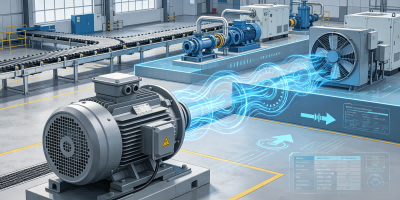
Low Voltage Motors are the most widely used electric motors in industrial, commercial and manufacturing applications. They provide reliable mechanical power for equipment such as pumps, fans, compressors, conveyors and production machinery.
Because of their flexibility, efficiency and easy installation, low voltage electric motors are commonly selected for general industrial applications where power requirements are below high voltage motor ranges.
When selecting industrial motors, understanding low voltage motor types, efficiency ratings and application requirements helps engineers choose the right solution.
What Are Low Voltage Motors?
Low voltage motors are electric motors designed to operate at standard industrial voltage levels. They convert electrical energy into mechanical power to drive different types of equipment.
Compared with high voltage motors, low voltage motors are typically used for small and medium power applications where simple installation, cost efficiency and reliable operation are important.
Common low voltage motor voltage ranges include:
- 230V
- 400V
- 415V
- 460V
- 690V
How Low Voltage Motors Work
Most industrial low voltage motors operate using electromagnetic principles. Electrical energy creates a magnetic field inside the motor, producing rotation through interaction between the stator and rotor.
Main components include:
- Stator
- Rotor
- Motor winding
- Bearings
- Cooling fan
- Motor enclosure
Types of Low Voltage Motors
Different industrial applications require different motor designs. Common low voltage motor types include induction motors, brake motors and high efficiency motors.
Low Voltage Induction Motors
Low voltage induction motors are the most common industrial motor type because they offer reliable performance, simple maintenance and long service life.
They are widely used in:
- Pumps
- Fans
- Compressors
- Conveyor systems
- Industrial machinery
Three Phase Low Voltage Motors
Three phase low voltage motors are commonly used in industrial facilities because they provide smooth operation and efficient power transmission.
They are suitable for continuous-duty applications requiring stable performance.
Learn more about three phase motors.
Brake Motors
Brake motors combine an electric motor with an integrated braking system.
They are commonly used in applications requiring accurate stopping and positioning, such as conveyors and lifting equipment.
High Efficiency Low Voltage Motors
Modern low voltage motors often use advanced designs to achieve higher efficiency levels and reduce energy consumption.
Many industrial customers select IE3 and IE4 high efficiency motors to reduce operating costs.
Advantages of Low Voltage Motors
Easy Installation
Low voltage motors are easier to install because they use common electrical systems available in most industrial facilities.
Cost Effective Solution
Compared with high voltage motors, low voltage motors generally require lower initial investment and simpler supporting equipment.
Wide Application Range
Low voltage motors are suitable for many industries and equipment types.
Reliable Performance
With proper selection and maintenance, low voltage motors can provide reliable operation for many years.
Low Voltage Motor Efficiency Classes
Motor efficiency is an important factor when selecting industrial motors because energy costs often represent a significant part of total operating expenses.
Common efficiency levels include:
- IE1 Standard Efficiency
- IE2 High Efficiency
- IE3 Premium Efficiency
- IE4 Super Premium Efficiency
Higher efficiency motors reduce energy losses and improve long-term operating economics.
Low Voltage Motor Applications
Pump Applications
Low voltage motors are widely used for water pumps, process pumps and industrial pumping systems.
Learn more about pump motors.
Fan and Ventilation Systems
Fans and ventilation equipment commonly use low voltage motors because they require reliable continuous operation.
Compressors
Industrial compressors often use low voltage motors for manufacturing and processing applications.
Material Handling Equipment
Conveyors and production systems rely on low voltage motors for efficient movement and control.
Low Voltage Motors vs High Voltage Motors
| Category | Low Voltage Motors | High Voltage Motors |
|---|---|---|
| Power Range | Small and medium applications | Large industrial applications |
| Installation | Simple installation | Requires specialized systems |
| Applications | Factories and general machinery | Mining, power and heavy industry |
| Cost | Lower investment | Higher investment |
How to Select the Right Low Voltage Motor
Selecting a suitable low voltage motor requires evaluating several factors:
- Motor power rating
- Operating speed
- Efficiency requirements
- Installation environment
- Protection level
- Duty cycle
Low Voltage Motor Protection and Reliability
Motor protection is important for maintaining reliable operation.
Important considerations include:
- Motor enclosure type
- Cooling method
- Insulation system
- Bearing quality
Understanding motor enclosure types helps engineers select suitable protection levels.
Choosing the Right Industrial Motor Supplier
A professional motor supplier can help customers select the correct motor based on power requirements, efficiency targets and application conditions.
Ozan Industrial Motors supplies reliable low voltage motors for industrial applications including pumps, fans, compressors, conveyors and machinery.
Our team provides motor solutions based on technical specifications and customer requirements.
Frequently Asked Questions
What are low voltage motors used for?
Low voltage motors are used for pumps, fans, compressors, conveyors and general industrial equipment.
Are low voltage motors energy efficient?
Modern low voltage motors with IE3 and IE4 efficiency ratings provide excellent energy performance and reduced operating costs.
What is the difference between low voltage and high voltage motors?
Low voltage motors are designed for smaller and medium applications, while high voltage motors are used for large industrial equipment requiring higher power output.
How do I choose a low voltage motor?
Selection depends on power, speed, efficiency, protection requirements and operating environment.
Where are low voltage motors commonly installed?
They are widely installed in manufacturing plants, water systems, HVAC equipment, conveyors and industrial machinery.