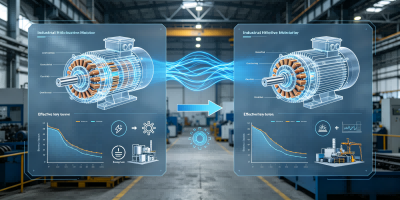
IE3 vs IE4 Motors is an important comparison for industrial companies looking to improve energy efficiency, reduce operating costs and select reliable electric motor solutions.
High efficiency motors are increasingly used in industrial applications because motors consume a significant amount of electricity during continuous operation. Choosing the correct efficiency class can create long-term energy savings.
When selecting industrial motors, understanding IE efficiency standards helps engineers and purchasing teams choose motors that meet performance and energy requirements.
What Are IE3 and IE4 Motors?
IE3 and IE4 motors are high efficiency electric motors classified according to international motor efficiency standards.
The IEC efficiency classification system defines different motor efficiency levels based on how effectively a motor converts electrical energy into mechanical power.
Higher efficiency ratings mean lower energy losses during operation.
Understanding Motor Efficiency Classes
Electric motor efficiency classes are used to measure the energy performance of motors.
Common IEC efficiency levels include:
- IE1 – Standard Efficiency
- IE2 – High Efficiency
- IE3 – Premium Efficiency
- IE4 – Super Premium Efficiency
Modern industrial applications increasingly use IE3 and IE4 motors because of their improved efficiency and lower lifetime operating costs.
What Are IE3 Motors?
IE3 motors, also known as Premium Efficiency motors, provide higher efficiency compared with traditional IE1 and IE2 motors.
They are widely used in industrial applications where energy savings, reliability and cost effectiveness are important.
Advantages of IE3 Motors
- Lower energy consumption
- Reduced operating costs
- Improved motor performance
- Suitable for continuous industrial operation
- Widely available worldwide
What Are IE4 Motors?
IE4 motors, also known as Super Premium Efficiency motors, provide even higher efficiency than IE3 motors.
They are designed to minimize energy losses through improved electrical design, advanced materials and optimized motor construction.
Advantages of IE4 Motors
- Maximum energy efficiency
- Lower electricity costs
- Reduced heat generation
- Better long-term operating performance
- Improved sustainability
IE3 vs IE4 Motors Comparison
| Category | IE3 Motors | IE4 Motors |
|---|---|---|
| Efficiency Level | Premium Efficiency | Super Premium Efficiency |
| Energy Consumption | Low | Lower |
| Operating Cost | Reduced | Further reduced |
| Initial Cost | Moderate investment | Higher initial investment |
| Best Application | Most industrial applications | Energy intensive applications |
Energy Savings of IE4 Motors
The main advantage of IE4 motors is their ability to reduce energy losses during operation.
For industrial facilities operating motors continuously, even small efficiency improvements can create significant savings over the motor lifetime.
Energy savings depend on:
- Motor power rating
- Operating hours
- Load conditions
- Electricity costs
- Motor efficiency difference
Benefits of High Efficiency Motors
Lower Energy Costs
High efficiency motors reduce electricity consumption by improving the conversion of electrical energy into mechanical power.
For industries with many motors operating every day, energy savings can significantly reduce production costs.
Reduced Carbon Emissions
Lower energy consumption also helps companies reduce carbon emissions and improve sustainability performance.
Lower Operating Temperature
Higher efficiency motors produce fewer energy losses in the form of heat.
Reduced heat generation can improve motor reliability and extend service life.
Longer Service Life
Efficient motor designs combined with reliable insulation and cooling systems help maintain stable performance.
Learn more about motor insulation classes.
IE3 and IE4 Motor Applications
IE3 and IE4 motors are used across many industries requiring reliable and energy-efficient operation.
Manufacturing Industry
Factories use high efficiency motors for production equipment, conveyors, pumps and ventilation systems.
Pump Systems
Industrial pumps often operate for long periods, making motor efficiency an important factor in reducing energy costs.
Learn more about pump motors.
Fans and HVAC Systems
Fans and ventilation systems benefit from efficient motors because they often operate continuously.
Compressors
Air compressors and industrial compressors require reliable motors with high efficiency performance.
How to Choose Between IE3 and IE4 Motors
The choice between IE3 and IE4 motors depends on application requirements, operating conditions and expected energy savings.
Operating Hours
Applications running many hours per year usually benefit more from IE4 motors because energy savings accumulate over time.
Motor Power Rating
Large motors generally provide greater energy-saving potential because they consume more electricity.
Energy Cost
Facilities with high electricity prices may achieve faster returns by upgrading to higher efficiency motors.
Application Requirements
Engineers should consider load characteristics, environment and reliability requirements before selecting the motor efficiency level.
IE3 and IE4 Motors Standards
IEC efficiency standards provide a global framework for evaluating electric motor efficiency.
Many countries and regions have introduced minimum efficiency requirements to encourage the adoption of energy-saving motor technologies.
IE3 vs IE4 Motors and Sustainability
Energy-efficient motors play an important role in industrial sustainability strategies.
By reducing electricity consumption, companies can lower operating expenses while improving environmental performance.
For industries focused on long-term efficiency improvements, selecting suitable IE3 and IE4 high efficiency motors is an effective solution.
IE3 vs IE4 Motors and Motor Selection
Efficiency should be considered together with other motor specifications, including power, speed, protection level and operating environment.
Engineers should review technical information from the motor nameplate and manufacturer documentation before making a final decision.
Learn more about electric motor nameplate information.
Choosing the Right High Efficiency Motor Supplier
A professional motor supplier can help customers select suitable IE3 and IE4 motors based on application requirements and energy-saving goals.
Ozan Industrial Motors supplies high efficiency industrial electric motors for applications including pumps, fans, compressors, conveyors and manufacturing equipment.
Our team provides motor solutions based on technical specifications, efficiency requirements and operating conditions.
Frequently Asked Questions
What is the difference between IE3 and IE4 motors?
IE4 motors provide higher efficiency than IE3 motors and reduce energy losses during operation.
Are IE4 motors worth the higher cost?
For applications with long operating hours, IE4 motors can provide significant energy savings and lower lifetime operating costs.
Are IE3 motors still commonly used?
Yes. IE3 motors are widely used worldwide and meet many industrial efficiency requirements.
Which motor is more efficient, IE3 or IE4?
IE4 motors are more efficient because they have lower energy losses compared with IE3 motors.
Where are IE3 and IE4 motors used?
They are used in manufacturing, pumps, fans, compressors, HVAC systems and other industrial applications.