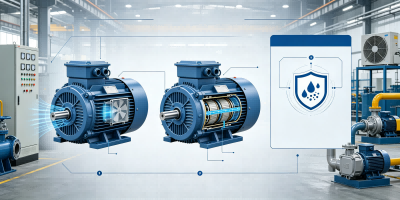
Electric Motor Enclosure Types determine how a motor is protected from dust, moisture, contaminants and environmental conditions during operation. Choosing the correct enclosure design is essential for motor reliability, cooling performance and service life.
Industrial environments can vary significantly. Motors used inside clean factories may require different protection compared with motors installed outdoors, in dusty areas or hazardous locations.
When selecting industrial motors, understanding TEFC, ODP and IP protection ratings helps engineers choose the correct motor design for each application.
What Are Electric Motor Enclosure Types?
Electric motor enclosure types describe the physical design used to protect internal motor components from external environmental conditions.
The enclosure affects:
- Protection against dust and moisture
- Cooling performance
- Motor durability
- Maintenance requirements
- Application suitability
Different industries require different enclosure designs depending on operating conditions.
Why Motor Enclosure Design Matters
The motor enclosure plays an important role in protecting sensitive internal components such as windings, bearings and electrical connections.
A suitable enclosure helps prevent:
- Dust contamination
- Water damage
- Corrosion
- Overheating
- Premature motor failure
Selecting the wrong enclosure type can reduce motor performance and shorten service life.
TEFC Motors Explained
TEFC motors (Totally Enclosed Fan Cooled motors) are one of the most common industrial motor enclosure designs.
A TEFC motor uses a completely enclosed housing with an external cooling fan mounted on the motor shaft. The fan circulates air over the motor frame to remove heat.
The enclosed design prevents external contaminants from entering the motor interior.
How TEFC Motors Work
TEFC motors use a combination of:
- Sealed motor enclosure
- External cooling fan
- Cooling fins on the frame
- Protected internal components
Heat generated inside the motor is transferred through the frame and removed by external airflow.
Advantages of TEFC Motors
- Good protection against dust and moisture
- Suitable for harsh industrial environments
- Reliable long-term operation
- Reduced contamination risk
- Wide application range
TEFC Motor Applications
TEFC motors are commonly used in:
- Pumps
- Fans
- Compressors
- Conveyors
- Manufacturing equipment
- Industrial machinery
ODP Motors Explained
ODP motors (Open Drip Proof motors) are designed with openings that allow cooling air to flow directly through the motor.
The open design improves ventilation and cooling efficiency but provides less protection against environmental contaminants.
ODP motors are typically used in clean and dry indoor environments.
How ODP Motors Work
ODP motors allow air movement through ventilation openings in the motor enclosure.
This design provides:
- Better airflow
- Efficient cooling
- Simple construction
- Lower initial cost
Advantages of ODP Motors
- Good cooling performance
- Lower purchase cost
- Simple maintenance
- Suitable for clean indoor applications
ODP Motor Applications
ODP motors are commonly used in:
- Indoor ventilation systems
- Clean manufacturing environments
- HVAC equipment
- Light industrial applications
TEFC vs ODP Motors Comparison
| Category | TEFC Motors | ODP Motors |
|---|---|---|
| Enclosure Design | Totally enclosed | Open ventilation design |
| Environmental Protection | Higher protection | Lower protection |
| Cooling Method | External cooling fan | Air circulation through openings |
| Application | Industrial environments | Clean indoor environments |
| Contamination Resistance | Excellent | Limited |
Understanding IP Ratings for Electric Motors
IP ratings define the level of protection provided by electrical equipment enclosures against solid objects and water.
The IP system is defined by international standards and is commonly used when specifying industrial motors.
How IP Ratings Are Structured
An IP rating contains two numbers:
- The first number indicates protection against solid particles
- The second number indicates protection against water
For example:
IP55
- 5 = Protected against dust entry
- 5 = Protected against water jets
IP55 Motors Explained
IP55 motors are among the most common industrial motor protection designs.
They provide:
- Protection against harmful dust deposits
- Protection against water jets from any direction
- Reliable operation in many industrial environments
Many industrial TEFC motors use IP55 protection because it provides a good balance between protection and cost.
IP56 and IP65 Motor Protection
IP56 Motors
IP56 motors provide improved water protection compared with IP55 designs and are suitable for more demanding environments.
IP65 Motors
IP65 motors provide higher protection against dust and water, making them suitable for applications requiring increased environmental protection.
How to Choose the Right Motor Enclosure Type
Selecting the correct enclosure depends on several operating factors.
Environmental Conditions
Consider whether the motor will operate indoors, outdoors, in dusty environments or areas exposed to moisture.
Dust and Water Protection
Applications with dust, humidity or water exposure usually require enclosed motor designs such as TEFC motors.
Cooling Requirements
The enclosure design affects heat dissipation and motor temperature performance.
For demanding applications, engineers should also evaluate motor insulation classes.
Industrial Motor Applications and Enclosure Selection
Manufacturing Facilities
Manufacturing equipment often uses TEFC motors because of their reliable protection against dust and industrial contaminants.
Pump Systems
Pump applications commonly require enclosed motors because of moisture exposure.
Learn more about pump motors.
Outdoor Applications
Outdoor installations typically require higher protection ratings to withstand weather conditions.
Hazardous Areas
Hazardous locations may require specialized designs such as explosion proof motors.
Motor Enclosure Types and Energy Efficiency
The enclosure design does not directly determine motor efficiency, but proper protection helps maintain stable operating conditions.
Combining suitable enclosure protection with efficient motor designs such as IE3 and IE4 motors can improve long-term operating performance.
Choosing the Right Industrial Motor Supplier
A professional motor supplier should evaluate enclosure requirements together with power rating, efficiency, installation environment and application conditions.
Ozan Industrial Motors supplies industrial electric motors suitable for different operating environments, including TEFC motors, high efficiency motors and customized motor solutions.
Our team helps customers select reliable motor solutions based on technical requirements.
Frequently Asked Questions
What are the most common electric motor enclosure types?
The most common types include TEFC, ODP and motors with different IP protection ratings.
Are TEFC motors better than ODP motors?
TEFC motors provide better protection and are more suitable for industrial environments, while ODP motors are suitable for clean indoor applications.
What does IP55 mean on a motor?
IP55 means the motor is protected against harmful dust and water jets from any direction.
Which motor enclosure is best for outdoor use?
TEFC motors with suitable IP ratings are commonly selected for outdoor industrial applications.
How do I choose the right motor enclosure?
Selection depends on environmental conditions, dust exposure, moisture levels, cooling requirements and application needs.