
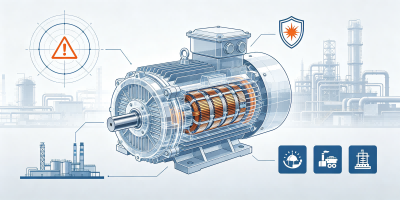
Explosion Proof Motors are specially designed electric motors used in hazardous environments where flammable gases, vapors, dust or combustible materials may exist. These motors help reduce the risk of ignition and provide reliable operation in demanding industrial applications.
Industries such as oil and gas, chemical processing, mining and manufacturing often require explosion proof motors to ensure safe and continuous equipment operation.
When selecting industrial motors for hazardous locations, understanding motor protection types, standards and applications is essential for choosing the correct solution.
What Are Explosion Proof Motors?
Explosion proof motors are electric motors designed to prevent internal electrical faults from igniting surrounding hazardous materials.
Unlike standard motors, explosion proof designs use reinforced enclosures and specialized construction methods to contain potential internal explosions and prevent flames or hot gases from escaping.
The purpose of an explosion proof motor is not to prevent an explosion from occurring inside the motor, but to ensure that any internal ignition does not create a dangerous external condition.
Why Explosion Proof Motors Are Important
Many industrial environments contain materials that can create explosive atmospheres under certain conditions.
These may include:
- Flammable gases
- Combustible dust
- Oil and fuel vapors
- Chemical gases
- Explosive particles
Using the correct explosion proof motor helps improve:
- Operational safety
- Equipment reliability
- Compliance with industrial standards
- Long-term maintenance performance
How Explosion Proof Motors Work
Explosion proof motors use special mechanical and electrical designs to control possible ignition sources.
Key design features include:
- Strong flame-resistant enclosure
- Specially designed joints and gaps
- Temperature-controlled surface design
- Improved insulation systems
- Protection against external hazardous materials
If an electrical fault creates sparks or high temperatures inside the motor, the enclosure is designed to contain the event and prevent ignition of the surrounding atmosphere.
Types of Explosion Proof Motors
Different hazardous environments require different explosion protection methods. Common explosion proof motor types include flameproof motors, increased safety motors and non-sparking motors.
Flameproof Motors (Ex d)
Flameproof motors, also known as Ex d motors, are designed to contain an internal explosion within the motor enclosure.
The enclosure is strong enough to withstand internal pressure while preventing flames from escaping to the surrounding hazardous area.
Ex d motors are commonly used in:
- Oil and gas facilities
- Petrochemical plants
- Refineries
- Chemical processing facilities
Increased Safety Motors (Ex e)
Increased safety motors use enhanced design methods to reduce the possibility of sparks, excessive temperatures and electrical faults during normal operation.
These motors are commonly used in areas where explosive atmospheres may occur but where internal ignition risks can be minimized through design improvements.
Non-Sparking Motors (Ex n)
Non-sparking motors are designed to prevent the generation of sparks during normal operation.
They are typically used in less hazardous environments where specific protection requirements apply.
Explosion Proof Motor Protection Classes
Explosion proof motors are classified according to different international protection systems depending on region and application requirements.
Common standards include:
- ATEX standards for European hazardous areas
- IECEx international certification system
- NEC hazardous location classification in North America
ATEX and IECEx Explosion Proof Standards
ATEX and IECEx are two important explosion protection systems used in industrial applications.
ATEX Motors
ATEX motors comply with European Union requirements for equipment used in potentially explosive atmospheres.
They are widely used in European industrial projects and international applications requiring ATEX certification.
IECEx Motors
IECEx motors follow an international certification system based on IEC explosion protection standards.
They are commonly used in global oil, gas, mining and industrial projects.
Hazardous Area Classification
The correct explosion proof motor depends on the hazardous area classification where the motor will operate.
Hazardous locations are generally divided into three main categories.
Class I Hazardous Locations
Class I areas contain flammable gases, vapors or liquids that may create explosive atmospheres.
Typical applications include:
- Oil refineries
- Fuel storage facilities
- Petrochemical plants
Class II Hazardous Locations
Class II areas contain combustible dust that may create explosive conditions.
Applications include:
- Grain processing
- Mining operations
- Powder handling facilities
Class III Hazardous Locations
Class III areas involve combustible fibers or materials that can create fire risks.
These environments require suitable motor protection based on the specific application.
Explosion Proof Motor Applications
Explosion proof motors are used in industries where safety and reliability are critical.
Oil and Gas Industry
Oil and gas facilities often contain flammable gases and vapors, making explosion proof motors essential for equipment such as pumps, compressors and ventilation systems.
Learn more about industrial solutions for oil and gas applications.
Mining Industry
Mining environments may contain combustible dust and challenging operating conditions.
Explosion proof motors help provide reliable operation for conveyors, ventilation systems and processing equipment.
Learn more about mining applications.
Chemical Processing
Chemical plants often require explosion protected equipment because of flammable chemicals and hazardous gases.
Manufacturing Facilities
Certain manufacturing processes involving solvents, coatings or combustible materials may require explosion proof motor solutions.
Explosion Proof Motors vs Standard Motors
| Category | Explosion Proof Motors | Standard Motors |
|---|---|---|
| Environment | Hazardous locations | General industrial areas |
| Enclosure Design | Reinforced protective enclosure | Standard enclosure |
| Safety Protection | Designed for explosive atmospheres | Normal operating environments |
| Applications | Oil, gas, mining, chemical | Factories and general equipment |
How to Choose the Right Explosion Proof Motor
Selecting the correct explosion proof motor requires evaluating several technical factors:
- Hazardous area classification
- Required certification
- Motor power rating
- Voltage and frequency
- Operating environment
- Temperature requirements
Engineers should confirm all specifications before selecting a motor for hazardous locations.
Motor information can also be checked through technical documentation and motor specifications.
Explosion Proof Motors and Industrial Reliability
Reliable explosion proof motors combine safety protection with industrial performance.
Modern designs often include improved insulation systems, efficient cooling methods and durable mechanical components.
For demanding applications, customers may also evaluate factors such as motor insulation classes and efficiency ratings.
Choosing the Right Industrial Motor Supplier
A professional motor supplier should understand hazardous area requirements, international standards and application conditions.
Ozan Industrial Motors supplies industrial electric motors for demanding applications including oil and gas, mining, chemical processing and industrial machinery.
Our team helps customers select suitable explosion proof motor solutions based on technical requirements and operating environments.
Frequently Asked Questions
What are explosion proof motors used for?
Explosion proof motors are used in hazardous environments containing flammable gases, vapors, dust or combustible materials.
Are explosion proof motors completely explosion resistant?
Explosion proof motors are designed to contain internal ignition and prevent it from creating a dangerous external explosion.
What is the difference between ATEX and IECEx motors?
ATEX is mainly used for European hazardous area requirements, while IECEx is an international certification system used worldwide.
Where are explosion proof motors commonly installed?
They are commonly used in oil and gas, mining, chemical processing and other hazardous industrial applications.
How do I choose an explosion proof motor?
Selection depends on hazardous area classification, certification requirements, power rating, operating environment and application conditions.