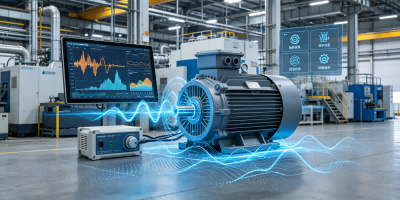
Electric Motor Vibration Analysis is an important condition monitoring method used to identify mechanical and electrical problems before they lead to motor failure.
Industrial motors often operate continuously under heavy loads. Excessive vibration can damage bearings, reduce efficiency and shorten equipment service life.
By monitoring vibration levels, engineers can improve motor reliability, reduce downtime and implement predictive maintenance strategies.
For companies selecting industrial motors, understanding vibration causes and prevention methods helps ensure stable long-term operation.
What Is Electric Motor Vibration Analysis?
Electric motor vibration analysis is the process of measuring and evaluating vibration signals generated during motor operation.
The analysis helps identify abnormal conditions such as:
- Bearing wear
- Shaft misalignment
- Mechanical imbalance
- Loose components
- Electrical problems
Early detection allows maintenance teams to correct problems before serious damage occurs.
Why Motor Vibration Monitoring Is Important
Normal electric motors produce a certain level of vibration during operation. However, excessive vibration usually indicates an underlying problem.
Regular vibration monitoring helps:
- Prevent unexpected failures
- Reduce maintenance costs
- Extend motor service life
- Improve equipment reliability
- Increase production efficiency
Common Causes of Electric Motor Vibration
Electric motor vibration can result from mechanical, electrical or installation-related issues.
Mechanical Imbalance
Mechanical imbalance occurs when the rotating components of a motor are not evenly distributed.
Common causes include:
- Uneven rotor mass distribution
- Accumulated dirt on rotating parts
- Damaged components
Imbalance creates centrifugal forces that increase vibration during operation.
Shaft Misalignment
Shaft misalignment occurs when the motor shaft and driven equipment shaft are not correctly aligned.
Misalignment can cause:
- Excessive bearing loads
- Coupling stress
- Higher vibration levels
- Reduced equipment life
Bearing Problems
Bearing issues are one of the most common causes of industrial motor vibration.
Problems may include:
- Bearing wear
- Insufficient lubrication
- Contamination
- Overheating
Learn more about electric motor bearings.
Loose Components
Loose bolts, mounting parts or mechanical connections can create abnormal vibration.
Regular inspection of motor installation points helps prevent these problems.
Electrical Problems
Electrical issues can also contribute to motor vibration.
Examples include:
- Voltage imbalance
- Rotor defects
- Electrical imbalance
- Uneven magnetic forces
Soft Foot Problems
Soft foot occurs when the motor base does not sit evenly on the mounting surface.
This condition creates additional stress on the motor frame and can increase vibration levels.
Motor Foundation Issues
A weak or unstable foundation can affect motor alignment and increase vibration.
Proper installation and foundation design are important for reliable motor operation.
Types of Motor Vibration
Radial Vibration
Radial vibration occurs perpendicular to the motor shaft direction.
It is commonly associated with:
- Imbalance
- Bearing problems
- Mechanical looseness
Axial Vibration
Axial vibration occurs along the shaft direction.
It may indicate:
- Coupling problems
- Alignment issues
- Thrust bearing problems
Torsional Vibration
Torsional vibration involves twisting forces along the motor shaft.
It is often related to load changes and drive system conditions.
Motor Vibration Measurement Methods
Modern vibration monitoring systems use different sensors to measure motor operating conditions.
Vibration Sensors
Sensors collect vibration data and allow engineers to analyze motor performance.
Accelerometers
Accelerometers are commonly used for industrial motor vibration monitoring because they provide accurate vibration measurements.
Velocity Sensors
Velocity sensors measure vibration speed and are commonly used for general machine condition monitoring.
Displacement Sensors
Displacement sensors measure the movement distance of rotating components and are often used for large industrial machines.
Vibration Analysis Techniques
Frequency Analysis
Frequency analysis identifies vibration patterns associated with specific mechanical problems.
FFT Analysis
FFT (Fast Fourier Transform) analysis separates vibration signals into different frequency components.
This helps engineers identify problems such as bearing defects and imbalance.
Trend Monitoring
Trend monitoring tracks vibration changes over time.
Gradual increases in vibration levels may indicate developing problems requiring maintenance.
Motor Bearing Vibration Analysis
Bearing vibration analysis is an important part of industrial motor maintenance.
Abnormal bearing vibration may indicate:
- Wear damage
- Lubrication problems
- Incorrect installation
- Excessive loading
How to Reduce Electric Motor Vibration
Proper Alignment
Accurate shaft alignment reduces mechanical stress and improves motor reliability.
Bearing Maintenance
Correct lubrication and regular inspection help prevent bearing-related vibration problems.
Correct Installation
Proper mounting, tightening and foundation preparation reduce vibration caused by installation problems.
Regular Monitoring
Continuous monitoring allows early detection of abnormal operating conditions.
Industrial Motor Predictive Maintenance
Vibration analysis is a key part of predictive maintenance programs used in modern industrial facilities.
By analyzing vibration data, maintenance teams can schedule repairs before unexpected failures occur.
This approach improves:
- Equipment availability
- Production efficiency
- Maintenance planning
- Operating cost control
Vibration Analysis in High Voltage Motors
High voltage motors require careful vibration monitoring because they often operate in critical industrial applications.
Industries such as mining, power generation and oil & gas rely on vibration analysis to maintain large motor reliability.
Learn more about high voltage motors.
Vibration Analysis in Three Phase Motors
Three phase motors are widely used in industrial applications, making regular condition monitoring important for reliable operation.
Proper vibration control helps maintain efficiency and reduce downtime.
Learn more about three phase motors.
Choosing a Reliable Industrial Motor Supplier
A professional motor supplier should consider mechanical design, bearing systems, cooling methods and operating conditions when selecting industrial motors.
Ozan Motor supplies reliable industrial electric motors for global customers, including three phase motors, high efficiency motors and customized motor solutions.
Our team helps customers select suitable motors based on application requirements and long-term reliability expectations.
Frequently Asked Questions
What is electric motor vibration analysis?
Electric motor vibration analysis measures and evaluates vibration signals to identify potential mechanical or electrical problems.
What causes electric motor vibration?
Common causes include imbalance, misalignment, bearing problems, loose components and electrical issues.
How is motor vibration measured?
Motor vibration is measured using sensors such as accelerometers, velocity sensors and displacement sensors.
Can vibration damage electric motors?
Yes. Excessive vibration can damage bearings, mechanical components and insulation systems.
How can motor vibration be reduced?
Proper installation, alignment, bearing maintenance and regular monitoring help reduce motor vibration.