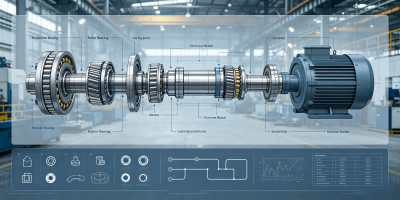
Electric Motor Bearings are critical components that support the motor shaft, reduce friction and ensure smooth rotation during operation. The correct bearing selection directly affects motor performance, reliability and service life.
Industrial motors operate under different conditions, including various speeds, loads and environments. Choosing suitable motor bearings helps reduce vibration, noise, overheating and unexpected downtime.
When selecting industrial motors, understanding bearing types, selection requirements and maintenance practices is important for achieving reliable long-term operation.
What Are Electric Motor Bearings?
Electric motor bearings are mechanical components installed between the motor shaft and housing. Their main function is to support rotating parts while minimizing friction and maintaining accurate shaft alignment.
Most industrial electric motors use rolling element bearings because they provide high efficiency, durability and reliable operation under continuous working conditions.
A typical motor bearing system consists of:
- Inner ring
- Outer ring
- Rolling elements
- Cage
- Lubrication system
Why Bearings Are Important in Electric Motors
Bearings play an essential role in motor performance. Poor bearing selection or maintenance can lead to increased vibration, higher energy consumption and motor failure.
High-quality motor bearings help provide:
- Smooth shaft rotation
- Reduced mechanical losses
- Lower vibration levels
- Improved motor efficiency
- Longer equipment service life
Common Types of Electric Motor Bearings
Different industrial applications require different bearing designs. The most common electric motor bearings include ball bearings and roller bearings.
Deep Groove Ball Bearings
Deep groove ball bearings are the most commonly used bearings in industrial electric motors.
They can handle both radial and moderate axial loads while providing smooth operation at high speeds.
Advantages of Deep Groove Ball Bearings
- High-speed capability
- Low friction
- Compact design
- Low maintenance requirements
Deep groove ball bearings are widely used in general-purpose motors, pumps, fans and other industrial equipment.
Angular Contact Ball Bearings
Angular contact ball bearings are designed to handle higher axial loads compared with standard ball bearings.
They are commonly used where the motor application requires precise shaft positioning and higher thrust capacity.
Typical Applications
- High-speed motors
- Precision machinery
- Special industrial equipment
Cylindrical Roller Bearings
Cylindrical roller bearings are designed for applications requiring high radial load capacity.
Compared with ball bearings, roller bearings can handle heavier loads because the contact area between rollers and raceways is larger.
Typical Applications
- Large industrial motors
- Heavy-duty machinery
- High-load applications
Spherical Roller Bearings
Spherical roller bearings are used where shaft misalignment or heavy operating conditions may occur.
They are suitable for demanding industrial environments requiring high load capacity and durability.
Ball Bearings vs Roller Bearings
| Category | Ball Bearings | Roller Bearings |
|---|---|---|
| Load Capacity | Suitable for moderate loads | Higher load capability |
| Speed | Excellent high-speed performance | Suitable for heavy-duty applications |
| Friction | Lower friction | Slightly higher friction |
| Applications | General industrial motors | Large and heavy-duty motors |
How to Select the Right Motor Bearing
Selecting the correct bearing requires evaluating the motor operating conditions and application requirements.
Bearing Load Requirements
The first consideration is the type and magnitude of load.
- Radial load from shaft rotation
- Axial load from equipment operation
- Combined loading conditions
Motor Speed Considerations
High-speed motors require bearings designed for reduced friction and stable operation at elevated RPM.
Motor speed information can be confirmed through motor specifications and technical documentation.
Operating Environment
The installation environment affects bearing selection.
Important factors include:
- Temperature
- Dust exposure
- Humidity
- Chemical contamination
- Operating hours
Lubrication Requirements
Proper lubrication is essential for bearing performance.
Common lubrication methods include:
- Grease lubrication
- Oil lubrication
- Special high-temperature lubricants
Common Electric Motor Bearing Problems
Bearing failure is one of the most common causes of industrial motor downtime.
Common problems include:
- Insufficient lubrication
- Contamination
- Overloading
- Misalignment
- Excessive vibration
- Improper installation
Signs of Bearing Failure
Early detection of bearing problems can prevent serious motor damage.
Common warning signs include:
- Unusual noise
- Increased vibration
- Higher operating temperature
- Reduced motor performance
- Visible bearing damage
Regular inspection and professional motor repair service can help extend equipment life and reduce unexpected failures.
Electric Motor Bearing Maintenance
Proper maintenance is essential for maximizing bearing service life.
Recommended maintenance practices include:
- Regular lubrication checks
- Vibration monitoring
- Temperature inspection
- Alignment checks
- Scheduled bearing replacement
Bearing Replacement Considerations
When replacing motor bearings, engineers should consider:
- Original bearing specifications
- Motor speed
- Load conditions
- Operating environment
- Manufacturer recommendations
Using the correct replacement bearing helps maintain motor performance and reliability.
Choosing the Right Industrial Motor Supplier
A professional motor supplier understands how bearing selection affects motor reliability, efficiency and maintenance requirements.
Ozan Industrial Motors supplies industrial electric motors for applications including pumps, fans, compressors, conveyors and custom machinery.
Our team can help customers select suitable motor solutions based on operating conditions, performance requirements and application needs.
Frequently Asked Questions
What types of bearings are used in electric motors?
Common electric motor bearings include deep groove ball bearings, angular contact ball bearings, cylindrical roller bearings and spherical roller bearings.
Which bearing is most common in industrial motors?
Deep groove ball bearings are the most commonly used because they provide reliable performance, low friction and good speed capability.
How long do electric motor bearings last?
Bearing life depends on load, speed, lubrication, operating environment and maintenance practices.
What causes electric motor bearing failure?
Common causes include poor lubrication, contamination, overload, misalignment and excessive vibration.
How can motor bearing life be extended?
Regular lubrication, condition monitoring, correct installation and proper bearing selection can significantly improve bearing service life.